All Services
What is a Central African Republic ECTN Certificate?
The Central African Republic ECTN is a mandatory shipping document for cargo entering or transiting the CAR. It ensures customs compliance, cargo tracking, and faster clearance. Shippers must obtain it before departure by submitting required documents through authorized agents. Without an ECTN, shipments risk fines, delays, or rejection.

Who Needs a Central African Republic ECTN?
- Exporters & Shippers – Businesses and individuals shipping goods to Burundi must obtain an ECTN before shipment.
- Freight Forwarders & Logistics Companies – Agents responsible for arranging shipments to Burundi need to ensure an ECTN is issued.
- Importers & Consignees in Burundi – The recipient of the cargo in Burundi must ensure that the ECTN is obtained to avoid fines and cargo delays.
- Shipping Lines – Some shipping lines may require the ECTN number before loading the cargo at the port of origin.
How to Obtain a Central African Republic ECTN?
1
Submit Required Documents
Provide the Bill of Lading, Commercial Invoice, Freight Invoice, and other supporting documents.
2
Processing & Validation
Your application will be reviewed, and any missing details will be requested.
3
ECTN Issuance
Once approved, you’ll receive the validated ECTN, which must be included in shipping documents.
Consequences of Not Having an ECTN
- Heavy fines at the destination
- Delays in cargo clearance
- Risk of cargo being returned or rejected
ECTN stands for Electronic Cargo Tracking Note. ECTN pretty much explains itself. Because it is a certificate that allows the authorities to track, manage, and supervise all shipments from loading to discharge. It also provides information about the cargos before they even arrive at the destination. It contains information about the exporter, the importer, information about the goods getting transported and their value, the cost of the freight, the type of shipment, the name of the vessel, etc. Central African Republic ECTN
What are the required documents?
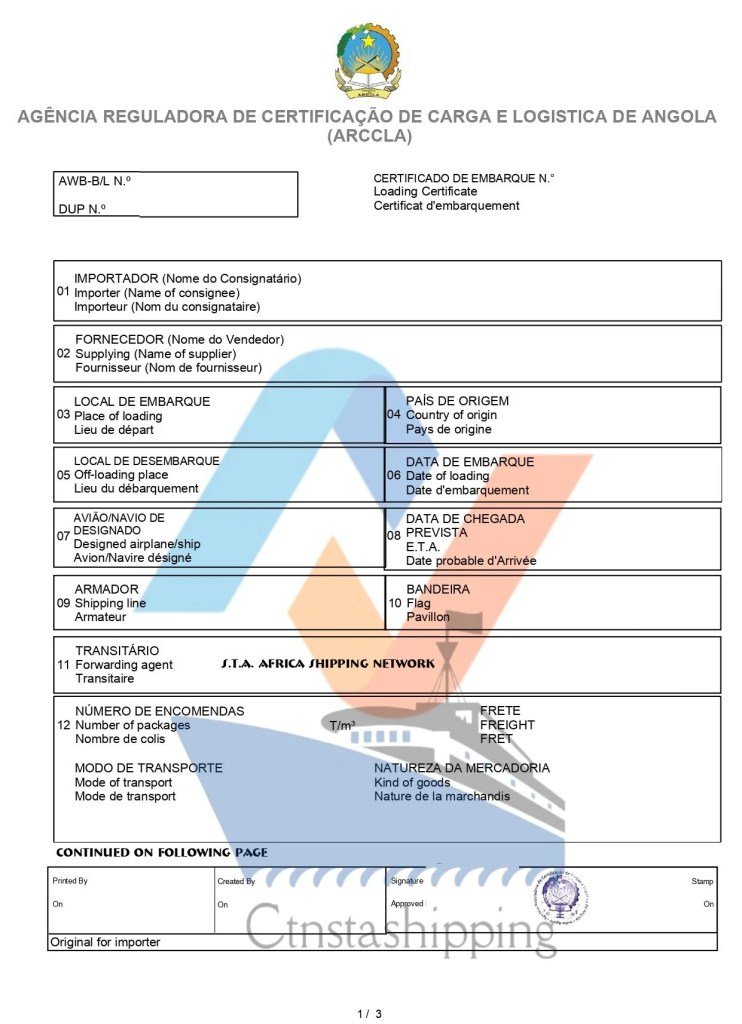
- Bill of Lading: A draft copy can be used initially, but the final version is necessary for validation.
- Commercial Invoice: This should detail the goods being shipped, including their value and currency (preferably in USD or EUR).
- Freight Invoice: Required if the freight cost isn’t specified on the commercial invoice, ensuring consistency in currency with the commercial invoice.
- Export Customs Declaration: While optional, this document provides additional details about the goods and should align with information in other documents, especially if it’s not a cross-trade shipment.
- Country of Origin of the Goods: Information indicating where the goods were manufactured or produced.
The ECTN certificate must be validated five days before the arrival of the vessel at the latest. If not, there would be a fine twice the amount of the ECTN cost plus the regulation charges determined by the Central African Republic National Port Officials.
Certificate cost depends on the number of Bill of Ladings and the containers, the country of origin, the port of discharge, etc. This is why we can’t give you an exact price for the CTN. But if you share your shipment’s details with us we can provide you the best charges for your certificate. We offer free quotation. Central African Republic ECTN